Take a careful look at it on the road.
It is clearly one of
the most beautiful things ever created in the recent Indian automotive times.
This piece of art:
i20 Elite/ Active reminds me of the
Volkswagen Scirocco;
which until now, I thought to be the best looking hatchback ever created.
It
graciously moves away from the trend of designing mainstream hatchbacks as
toads and frogs. The Swifts, Wagon Rs, Nissan Leaf, Toyota Yaris and Peugeots
were all corrupting the trend and the i-20 Elite/ Active is here to rescue us
with its gracious curves molded to some subdued muscles.
You can safely say that the i20 elite/Active have
transformed the Indian automotive design space. Something that was done by the Ford Ecosport sometime back, and the Daewoo Cielo some decades back. Now
that the market has seen such spectacular piece of art, the competition has to
roll up its sleeves, work hard to keep up and give the customers better
(Volkswagen, Chevy, Toyota: are you listening?).
Interiors

Once you get inside, it is fabulous! The two tone colors,
the small digital display for climate control, the steering mounted controls,
the chrome inserts: all make a great impression. The winner here is of course
the two tone color scheme: With a choice of racy orange or a cool blue options
to play around in the dashboard.
The plastic is certainly hard and not as soft
and plush as the Hondas, but it certainly feels top quality and like something
that will last. The seating is quite comfortable with little inserts, and an
array of features thoughtfully crafted making you feel special throughout the
vehicle.

As for the rear passengers, there is ample leg room. But what makes it
really wonderful at the back are the
rear AC vents. I believe that this is one
of the most useful features for the harsh Indian climate and a market where a
good percentage of the cars are
chauffeur driven (Yes! Hatchbacks included). As far as I can remember, in the
sub-10L category, only Tata had thought of this (in its Indigo XL, that bombed)
before Hyundai got it out in the top model of its i-10 Grand.
Plainly put: when
it comes to interiors, there is no competition for this Hyundai. Maruti does
make an attempt to give you lot of goodies, but it fails to keep up when it
comes to the quality of materials and the overall finishing. While I do condemn
the overpriced Volkswagens a lot, I do agree they have really good quality
stuff inside but again: the whole dashboard of the Polo/ Vento seems to be
ancient and from the 90s, nowhere close to the i-20 Active.
The Drive and Performance
The drive is what every Hyundai drive is like: smooth, soft
steering, comfortable suspension. Gear shifts are leisurely and the engine is
quite rev-happy. There is no turbo charger here and the 1.4L diesel pot does
not feel like it needs one. The torque delivery is mysteriously linear and has
striking resemblance to a petrol engine. You may rev the engine hard, but it
can only do so much in terms of acceleration. Its 0-100 figures may not be
something to write home about, but the brilliant part is the smooth power
delivery and decent torque at low ends, making this diesel a pleasure to drive
in the city limits. No shifting needed or wretched turbo lag at lower RPMs.
With experience with its ancestors on long highways, I know it handles really
well at high speeds as well, a tad better than the Swift/Ritz and almost in the
league of the VW Polo or the Ford Figo. On the highway, I do wish the steering had more weight. The smoothness of the steering means curtailing any form of feedback from the road: a standard characteristic of Hyundais. Fuel efficiency is proven to be as good
as the competition but in the mileage frantic Indian junta, I shall refrain
from mentioning the figure I have. I don’t want to instigate those aggrandizing
freaks who will come to argue with me pointlessly. (1)
Exteriors
 |
| VW Scirocco |

I could go on and on about the looks of this car. The fact
that it dislodged that age old beauty Scirocco from my mental podium is a
testimony to how imposing a presence this car has. Brochures apart, you have to
see the rear in flesh and blood; ahem.. or should I say: in Metal and Rubber.
Even those who are otherwise oblivious to automotive proceedings look up and
inquire about the car and the process to own it once an i20 Elite glides across
the streets. Unlike the Toyota
Etios Liva Cross, the
i20 Active is not just
about the inserting plastics to jack up the price. There is some work done with
the suspension as well. With the raised suspension, the Active has all the more
imposing presence and the bodywork has been incredibly done. I may say that in
white color, it does seem to be moving perilously close to the Ford Ecosport.
With the
projector headlamps, brilliant side skirts, standard alloy wheels, dull
aluminium texture look-alike fuel lid (I particularly love this one!!) and wonderful bumper inserts (rear reflectors
and front fog lamps): the
i20 can even dare challenge the German or British
marquees: the BMW X1, Jaguar XF included at a fraction of the price.
Trying to be a SUV??
Pardon me for mentioning Ford Ecosport as a competitor to
the i20 Active earlier somewhere in the text . Critics will be quick to point out that the two are different
segments. The semblance I draw is from the price and ground clearance: where
both the Ford and the Hyundai come surprisingly close to each other. While the
Active is no true off-roader, it does in some way fit into my price chart of
the Indian SUV scenario.
 |
| L>R: Mahindra Commander, Gypsy, Ford Endeavor, Tata Safari, Renault Duster, Ford Ecosport & Hyundai i20 Active (Prices in Rs.-Lacs) |
The graph here points out:
1. Mahindra Commanders and Gyspys were the only
options in the early 90s. SUVs really took off in the late 90s, the prices kept
on increasing with demand. Tata Safari and Ford Endeavor were the rage back
then in their times. Their era saw SUVs becoming the niche fashion statements with rising prices.
2. With the advent of the Renault Duster, SUVs were
seemingly affordable again. There needn’t be a real SUV, something that looked like
one was good enough. The Duster cracked this market formula: a car that
looked like a SUV at a decent price was the name of the game. We realized that
the Indian SUV market was more about looks and affordability than off-roading.
The industry was quick to see this trend and the result was the Ford Ecosport,
BMW X1, Premier Rio, etc. Even Mahindra made an attempt to joke around with
‘Quanto’.Somehow, i-20 Active/iX35 seem to be trying to fit into this SUV equation.
Don’t get carried away by my graph here. The i20 Active is
not a SUV. And neither are the Ford Ecosport and the Renault Duster pure blood
SUVs for that matter. At 10L+, i-20 Active is not a value proposition either.
The Diesel 1.4L motor I drove is no hyper-performance machinery. It just has an
above average acceleration and torque, possibly a tad lesser than what is
expected at its 10L+ price tag. The petrol twin with half the torque would be
miserable, I’m sure. My dream would be get that Verna 1.6 motor here and create
a maniacal racing machine. Also, whatever price you may pay, you cannot escape
the fact that this is just a cool hatchback. Don’t get me wrong, but this
beauty does not feel as planted on the road when it jumps around a bump or when
you try to steer it harshly. Agreed, it is better than most hatchbacks, but the
point I am coming to is that is in spite of its spruced up suspension and
beefed up tires, it cannot match a Honda City or a Ford Ecosport when it comes
to stability. Again, I cannot refrain to consider these cars as competition,
though a class above - thanks to the price.

Conclusion
Yet, I love this car and would recommend it to the right
category of people. Under-powered: umm. Not really, Pricey, yes. But the looks and features
will sweep you away. Make no mistake; this is eventually a
lifestyle vehicle. If you want to haul a family of 5 with three suitcases, go
for the Amaze/Dzire category. If you are one (or two) who drive(s) to work,
has(have) occasional company, like to be in a feel good environment and make
heads turn; look no further. The i20 Active pampers you, the looks, features and interiors may put cars a league or two above it to shame (Volkwagen Vento,
Toyota Corolla: do you get the hint??) and it comes with that Hyundai tag: great
quality and low cost of ownership guaranteed. Also, this vehicle will not age.
While sitting in a 3 year old Swift, Corolla or Figo cabin makes you feel ancient, a 10
year old Civic’s cabin still feels like a modern aircraft cockpit. Same would
be the case with the i-20 Active’s interiors several years down the line. It is
not just following the current trend, it is defining the future.
(1)
The
incident I refer to pertains to a conversation with a gentleman where I accidentally mentioned mileage of Marutis. However, he plainly refuted my figure,
the state of Indian roads, driving conditions and quite possibly the calorific
value of fuel. He was adamant about the fact that his Maruti Swift petrol got
him a mileage of 29kmpl in peak traffic, and he expressed concern about his old
Ford Fiesta which gave a ‘measly’ mileage of 25kmpl. My attempts to reason with
him to admit to a more scientific and factual figure resulted in a
mini-skirmish, with me eventually walking away from the maniacal battle-
leaving the fellow proud of his fleet and laughing away to glory. Victorious,
he went on to declare that all other car owners on the planet managing a mileage
in the range of 10-18 kmpl were brainless baboons and ought to take a lesson
from him on driving (or exaggerating).


 Driving through Langkawi on your own is highly recommended.
If you can brave the tropical sun a bit and pray to all Gods against rain, a
two wheeler is highly recommended over hiring a car. I love bikes, but those
automatic bikes/ scooters with smaller tires scare the living daylights out of
me. I announced my trepidation publicly and Sona gladly hopped on to the
rider’s seat with me at the back. The
ride is mesmerizing. You witness lush green, thickly tree scented air and keep
anticipating as to what a spectacle the next turn will bring for you.
 The Langkawi ropeway was a pain. The agonizing line here is
to blame for the pain. The websites, travel blogs and tripadvisor did counsel
us to pre-book the cable car online. However, this fact was too much for my
cache memory, which historically has shown poor performance in such rushed
mornings. So here we were, in the bright sun: in the perennial queue that
refused to slither on. So here’s what we did: We braved on the sun to excavate
our tickets and got the slot for late afternoon. Then, we returned to our dear
M-80 Major look-alike-Yamaha and zipped off to the ‘Seven Hills Waterfall’
which was located nearby; according to the map. It is quite a steep trek from
the parking – fact corroborated by our screaming knees (the next day). Here
Sona had a dreamy time taking a dip in the fresh waters.
 We then visited the crocodile farm. I am not sure if I can
recommend this as a ‘must visit place’, but we definitely had a good time. The
Crocs, slimy as they are, do make your spine shiver more than once, but the
farm is overall a pleasant place with a lot of variety and numbers to offer.
Another place worth a visit is the Eagle Square, which is the town center.
Although there’s not much to do here.

 We hit the local cafeteria at the Crocodile park and Sona
popped up a question which was becoming kind of obvious now: “Where are all the
local men? Why do I see only women working everywhere?”. This is quite a deep
and powerful question- in a good sense. This question came to us as all the
places we had visited (mostly servicing front ends: shops, ticket counters,
etc.), were manned (or woman-ned perhaps?) by women. Remember, Malaysia’s
population comprises predominantly of a Muslim population, and many nations
with similar concentrations are known not to be very conducive in terms of
liberty and working environment for women. With so many women working, Malaysia
has truly set an example not just for radical nations or the developing
countries, but even the developed ones of the world (I refer to this- related article from a recent Economist edition). We both were very
impressed by the equality maintained in both unskilled and skilled work
domains. We are well versed with the term “women empowerment” thanks to our
national jester back home in India (#RahulSpeaksToArnab),
and it is good to see more of results than talk here in Malaysia.


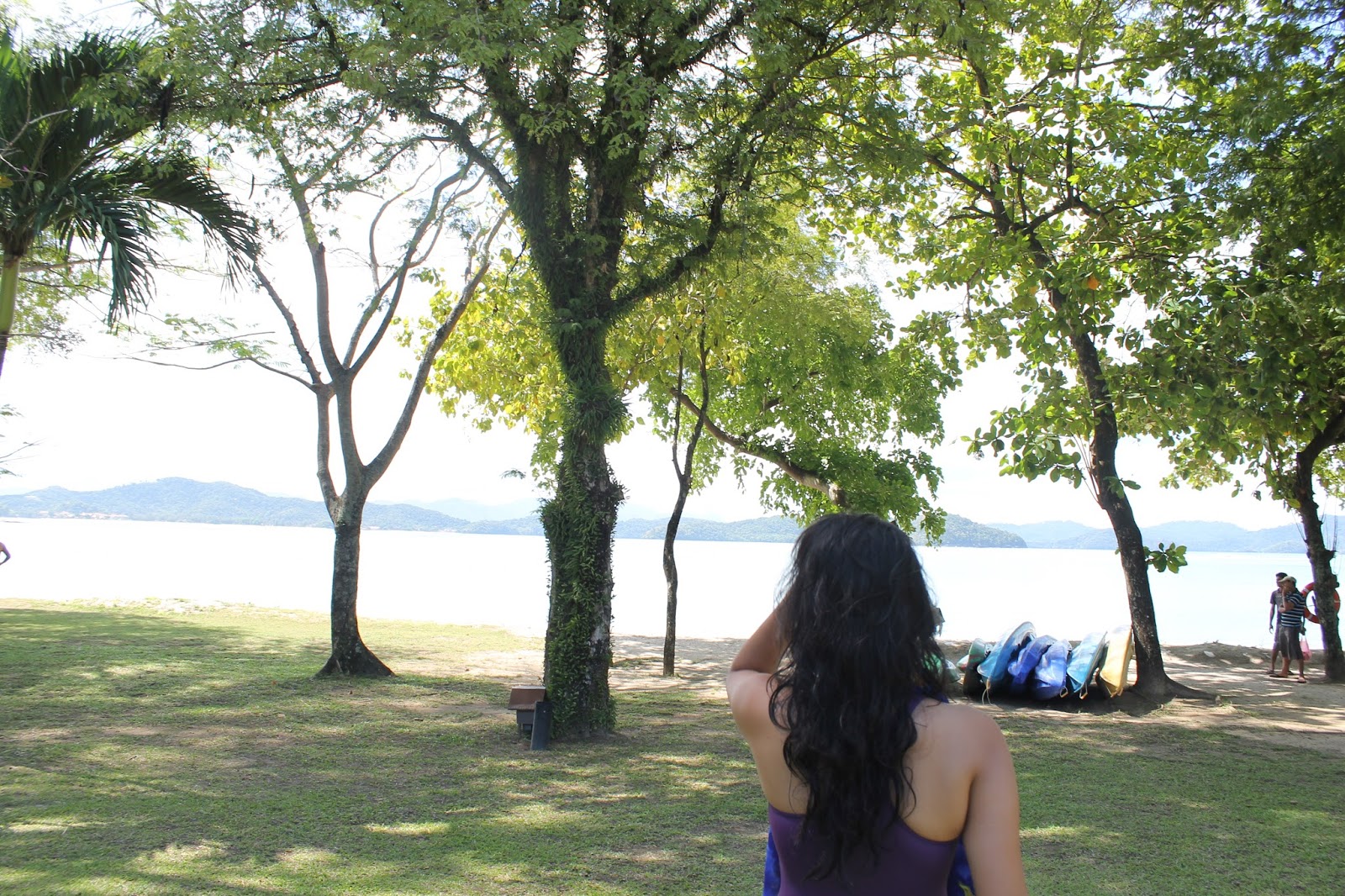
 Another thing I witnessed here was Infinity: Here, in the
vast expanse of nature seemed to have perhaps extended time into another
dimension, our senses working to soak in everything they could. And when we did
come out of this trance to reality, I immediately knew what infinity is. That
moment: out there was something that Sona and I will remember forever; no
matter how time treats us in various circumstances.
 We move on to Hans Zimmer’s compositions. They
may not be the mainstream hits and more often than not, they are missed out by
us. However- unknowingly, they have been the most critical factor for stirring
emotions in the Gladiator, Man of Steel, Inception & the Dark Knight
trilogy.
 Never mind the obvious heat or the absence of
snazzy clubs in Lagkawi, this is a place that sets you in a different frame of
mind. A feeling where you may witness clam, quietude and the perfect setup for
breathing in the beauty of the surroundings, ponder upon and play with the laws
of nature. In fact, this place may make you delve deeper into yourself and the
bonds you cherish.


 The Langkawi ropeway was a pain. The agonizing line here is
to blame for the pain. The websites, travel blogs and tripadvisor did counsel
us to pre-book the cable car online. However, this fact was too much for my
cache memory, which historically has shown poor performance in such rushed
mornings. So here we were, in the bright sun: in the perennial queue that
refused to slither on. So here’s what we did: We braved on the sun to excavate
our tickets and got the slot for late afternoon. Then, we returned to our dear
M-80 Major look-alike-Yamaha and zipped off to the ‘Seven Hills Waterfall’
which was located nearby; according to the map. It is quite a steep trek from
the parking – fact corroborated by our screaming knees (the next day). Here
Sona had a dreamy time taking a dip in the fresh waters.


 We then visited the crocodile farm. I am not sure if I can
recommend this as a ‘must visit place’, but we definitely had a good time. The
Crocs, slimy as they are, do make your spine shiver more than once, but the
farm is overall a pleasant place with a lot of variety and numbers to offer.
Another place worth a visit is the Eagle Square, which is the town center.
Although there’s not much to do here.


 We hit the local cafeteria at the Crocodile park and Sona
popped up a question which was becoming kind of obvious now: “Where are all the
local men? Why do I see only women working everywhere?”. This is quite a deep
and powerful question- in a good sense. This question came to us as all the
places we had visited (mostly servicing front ends: shops, ticket counters,
etc.), were manned (or woman-ned perhaps?) by women. Remember, Malaysia’s
population comprises predominantly of a Muslim population, and many nations
with similar concentrations are known not to be very conducive in terms of
liberty and working environment for women. With so many women working, Malaysia
has truly set an example not just for radical nations or the developing
countries, but even the developed ones of the world (I refer to this- related article from a recent Economist edition). We both were very
impressed by the equality maintained in both unskilled and skilled work
domains. We are well versed with the term “women empowerment” thanks to our
national jester back home in India (#RahulSpeaksToArnab),
and it is good to see more of results than talk here in Malaysia.


 Another thing I witnessed here was Infinity: Here, in the
vast expanse of nature seemed to have perhaps extended time into another
dimension, our senses working to soak in everything they could. And when we did
come out of this trance to reality, I immediately knew what infinity is. That
moment: out there was something that Sona and I will remember forever; no
matter how time treats us in various circumstances.